

Table of Contents
Introduction
Hydraulic seamless steel pipes represent a specialized category within seamless steel pipe products. Below are five key distinctions between hydraulic seamless steel pipes and standard seamless steel pipes, offering a comprehensive professional purchasing guide across multiple dimensions.
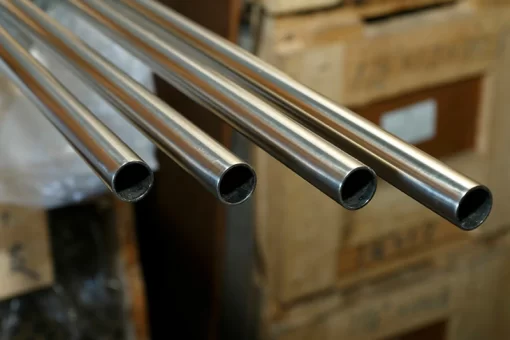
Dimensional Precision and Tolerances
The most visible difference lies in the accuracy of the dimensions.
- Hydraulic Seamless Pipe: Manufactured to extremely tight tolerances (often following DIN 2391 or EN 10305-1 standards). Both the outer diameter (OD) and inner diameter (ID) are precisely controlled to ensure a leak-free fit with hydraulic fittings and ferrules.
- Ordinary Seamless Pipe: Typically follows general standards like ASTM A106 or API 5L. The tolerances are much looser, as they are primarily used for fluid transport where millimetric precision isn’t the priority.
Inner Surface Smoothness
For hydraulic systems, the “cleanliness” of the flow is everything.
- Hydraulic Seamless Pipe: Undergo special internal treatments to ensure a smooth, scale-free inner surface. This minimizes turbulence and prevents friction-induced heat.
- Ordinary Seamless Pipe: May have a rougher internal finish with minor scales or oxidation, which is acceptable for water or gas transport but would damage sensitive hydraulic valves and pumps.
Pressure Rating and Yield Strength
While both are “seamless,” their ability to handle “burst pressure” differs.
- Hydraulic Seamless Pipe: Designed to withstand high-pressure pulses and vibrations. They often feature higher yield strength and are tested at pressures far exceeding their working load.
- Ordinary Seamless Pipe: Rated for static or low-pressure flow. They are not optimized for the rapid pressure spikes common in hydraulic cylinders.
Surface Treatment and Corrosion Resistance
- Hydraulic Seamless Pipe: Usually come with professional surface protection, such as Zinc plating (Galvanized), Phosphating, or Cr6-free coating. This ensures the pipes remain rust-free during storage and operation in humid environments.
- Ordinary Seamless Pipe: Often supplied with a simple black primer or oil coating, which provides minimal long-term corrosion protection.
Material Purity and Ductility
- Hydraulic Seamless Pipe: Made from high-quality “killed steel.” The material is highly ductile, allowing the pipe to be bent (using a pipe bender) or flared without cracking.
- Ordinary Seamless Pipe: Generally more rigid. If you attempt to perform a 90-degree cold bend on a standard structural seamless pipe, the risk of wall thinning or external cracking is significantly higher.
Summary
In summary, standard seamless steel pipes reliably meet general structural and fluid conveyance requirements, while hydraulic seamless steel pipes are precision components engineered for the most demanding environments. The choice between these pipes depends on your project’s pressure requirements, dimensional accuracy, and durability objectives.