

Table of Contents
Introduction
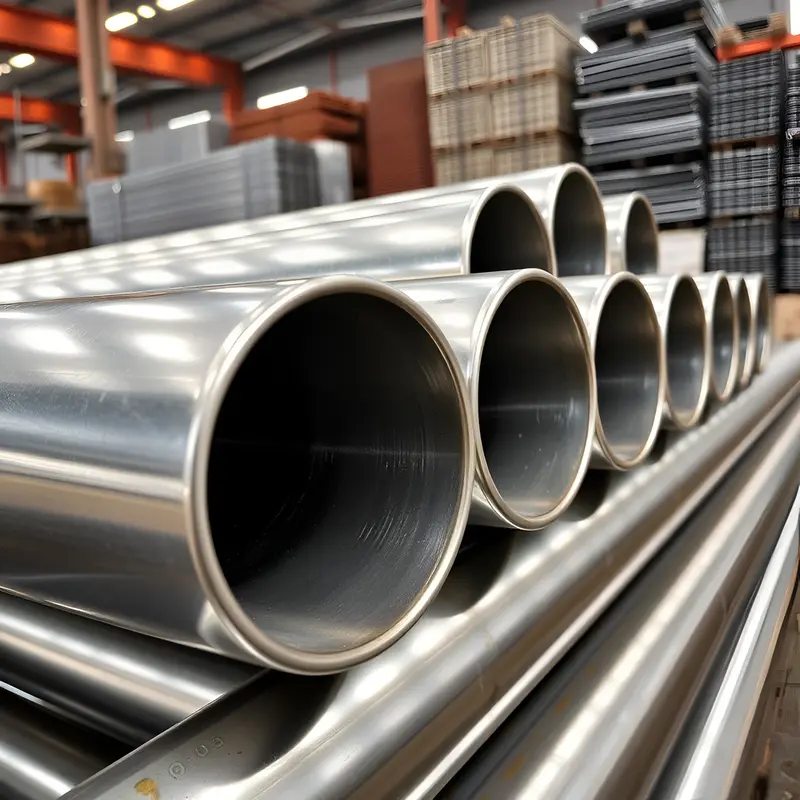
In modern industrial engineering, material selection often determines the success or failure of a project. When confronted with extreme temperatures, high-pressure environments, and highly corrosive media, traditional steel or aluminum pipes frequently fall short. This is where titanium alloy pipes truly shine.
Renowned for their exceptional strength-to-weight ratio and corrosion resistance, titanium alloy pipes have become the material of choice in aerospace, oil and gas, offshore engineering, and chemical processing industries.
In this comprehensive guide, we will delve into the properties of titanium alloy pipes, the distinctions between seamless and welded manufacturing processes, detailed comparisons of commonly used grades (such as Grade 2 and Grade 5), and how they can optimize your industrial projects.
What is Titanium Alloy Pipe?
Titanium alloy pipes are manufactured by alloying titanium with other chemical elements such as aluminum, vanadium, molybdenum, zirconium, and others. While commercially pure titanium already exhibits excellent corrosion resistance, the addition of alloying elements significantly enhances the pipes’ tensile strength, high-temperature stability, or machinability.
The 6 Irreplaceable Advantages of Titanium Alloy Pipes
Strength-to-Weight Ratio
Titanium has a density of only about 60% that of steel (approximately 4.51 g/cm³), yet many titanium alloys achieve strength levels comparable to or even exceeding those of high-strength structural steels.
In aerospace and high-end racing, every gram of weight reduction translates to improved fuel efficiency or increased payload capacity. Titanium alloy pipes can achieve a 40% weight reduction while maintaining equivalent structural strength—a performance that materials like stainless steel simply cannot match.
Unmatched Corrosion Resistance
Because titanium immediately forms an extremely dense passivation layer (TiO₂) upon contact with oxygen,titanium alloy pipes exhibit virtually no corrosion loss when handling wet chlorine gas, hypochlorites, seawater, and highly oxidizing acids. In common chemical processes, the service life of titanium pipes exceeds that of conventional materials by more than tenfold, significantly reducing downtime and maintenance costs.
High Temperature Stability
Traditional aluminum pipes experience a sharp decline in strength above 200°C, while stainless steel pipes are prone to oxidation at high temperatures. In contrast, high-performance titanium alloys (such as Ti-6Al-4V) maintain excellent mechanical properties in environments exceeding 500°C. This makes them the optimal choice for aircraft engine components and high-temperature exhaust systems.
Excellent biocompatibility
Titanium is one of the few metals that does not cause rejection reactions in the human body and is non-magnetic. In the medical field, titanium alloy pipes are commonly used to manufacture components for human implants, intramedullary nails, and precision medical instruments. It is the only material capable of long-term presence within the body’s complex fluid environment without releasing toxic metal ions.
Cryogenic Properties
Most steels become as brittle as glass at extremely low temperatures, such as below -150°C. In contrast, titanium alloys exhibit increased strength in cryogenic environments while maintaining excellent ductility and toughness. This gives titanium alloy pipes an absolute advantage in cryogenic engineering applications involving liquid hydrogen, liquid oxygen, and similar substances.
Fatigue & Impact Resistance
Titanium alloy pipes not only possess exceptional strength but also exhibit excellent toughness, enabling them to withstand prolonged cyclic stress. In applications such as deep-sea drilling and high-end bicycle frames, materials must endure repeated pressure fluctuations. The extremely high fatigue limit of titanium alloy pipes ensures they will not undergo sudden fracture under long-term cyclic loading.
Seamless vs. Welded Titanium Pipe
Based on manufacturing processes, titanium alloy pipes are primarily categorized into two types. Understanding their differences is crucial for budget control and application safety.

Seamless Titanium Alloy Pipe
- Manufacturing Process:The cut steel billet is heated and pierced, then undergoes a series of processes such as hot rolling or cold drawing to form a seamless pipe—a single piece without welded seams.
- Advantages:Capable of withstanding higher working pressures; uniform microstructure; eliminates welded seams as potential weak points.
- Primary Applications:High-pressure hydraulic systems, deep-sea oil and gas extraction, critical heat exchangers.
Welded Titanium Pipe
- Manufacturing Process: Formed by rolling titanium strip into a tube shape and then welded.
- Advantages: Lower production costs; better wall thickness uniformity; capable of producing large-diameter pipes.
- Primary Applications: Low-pressure fluid conveyance, exhaust systems, power plant condensers.
Detailed Guide to Titanium Pipe Grades 1-12
In international standards such as ASTM B338/B861, titanium grades are primarily categorized into commercial pure titanium (CP Titanium) and titanium alloys. Below are the core characteristics and optimal application scenarios for each grade.
Commercial Pure Grades: Gr 1 – Gr 4
- Grade 1 (UNS R50250):
Characteristics: The softest and most ductile grade. Exhibits excellent cold formability and weldability.
Applications: Complex plate heat exchangers, explosion-bonded plates, deep-drawn components. - Grade 2 (UNS R50400):
Characteristics: “The industry standard material.” Achieves a perfect balance between strength, ductility, and weldability.
Applications: Seawater desalination piping, chemical process piping, power plant condensers. - Grade 3 (UNS R50550):
Characteristics: Higher strength than Gr 2, but slightly reduced formability.
Applications: Pressure vessels, aircraft engine components. - Grade 4 (UNS R50700):
Characteristics: Highest strength grade among pure titanium alloys, with exceptional corrosion resistance.
Applications: Precision medical implants, high-strength hydraulic piping.
Alpha-Beta & Near-Alpha Alloys: Gr 5 – Gr 12
Titanium alloys significantly enhance their mechanical properties or resistance to corrosion by special media through the addition of elements such as aluminum (Al), vanadium (V), palladium (Pd), and molybdenum (Mo).
- Grade 5 (Ti-6Al-4V, UNS R56400):
Characteristics: Exhibits extremely high strength and heat resistance, capable of being strengthened through heat treatment.
Applications: Aerospace structural components, high-strength fasteners, oil and gas downhole tools. - Grade 7 (Ti-0.15Pd, UNS R52400):
Properties: Palladium added to Grade 2. Exhibits the strongest resistance to crevice corrosion in reducing acids (e.g., dilute sulfuric acid, hydrochloric acid).
Applications: Chemical processing equipment in extreme corrosion environments, nuclear waste treatment systems. - Grade 9 (Ti-3Al-2.5V, UNS R63250):
Characteristics: Positioned between Grade 2 and Grade 5, combining high strength with excellent cold workability.
Applications: Aircraft hydraulic lines (e.g., Boeing, Airbus models), high-end bicycle frames, racing chassis. - Grade 11 (Ti-0.15Pd, UNS R52250):
Characteristics: Similar to Grade 7 but based on Grade 1 pure titanium, offering exceptional ductility.
Applications: Components requiring extreme corrosion resistance and complex geometries. - Grade 12 (Ti-0.3Mo-0.8Ni, UNS R53400):
Characteristics: Contains added molybdenum and nickel. Excels in high-temperature, high-pH environments and offers greater cost advantages than Grade 7.
Applications: Chemical process high-temperature heat exchangers, pressure vessel fittings.
Grade 1-12 Quick Comparison Chart
| Grade | UNS Number | Type | Main Alloying Elements | Tensile Strength (Min, MPa) | Yield Strength (Min, MPa) |
|---|---|---|---|---|---|
| Grade 1 | R50250 | CP Titanium | Low Oxygen / Fe | 240 | 170 |
| Grade 2 | R50400 | CP Titanium | Standard Oxygen / Fe | 345 | 275 |
| Grade 3 | R50550 | CP Titanium | Medium Oxygen / Fe | 450 | 380 |
| Grade 4 | R50700 | CP Titanium | High Oxygen / Fe | 550 | 483 |
| Grade 5 | R56400 | α-β Alloy | 6% Al, 4% V | 895 | 825 |
| Grade 7 | R52400 | CP + Pd | 0.15% Palladium | 345 | 275 |
| Grade 9 | R63250 | α-β Alloy | 3% Al, 2.5% V | 620 | 483 |
| Grade 11 | R52250 | CP + Pd | 0.15% Palladium | 240 | 170 |
| Grade 12 | R53400 | Near-α Alloy | 0.3% Mo, 0.8% Ni | 483 | 345 |
Detailed Explanation of Titanium Alloy Pipe Standards
When procuring and manufacturing titanium alloy pipes, adherence to international standards is essential for ensuring safety and performance. These standards not only specify the chemical composition of the tubing but also impose stringent requirements on dimensional tolerances, pressure limits, and testing procedures.The most critical standard systems include ASTM (American Society for Testing and Materials) and AMS (Aerospace Material Specifications).
ASTM B338
- Scope: Seamless and welded titanium and titanium alloy pipe for heat exchangers and condensers.
- Core Requirements: Due to their use in heat exchange environments, this standard imposes extremely stringent dimensional tolerances (OD, wall thickness) on the pipes.
ASTM B861
- Scope: General standard for seamless titanium and titanium alloy pipes.
- Core Requirements: Covers dozens of grades from Gr 1 to Gr 38, primarily for general industrial fluid conveyance. Emphasizes overall pipe strength and pressure resistance.
ASTM B862
- Scope: General standard for welded titanium and titanium alloy pipes.
- Core Requirements: Specifically addresses pipes fabricated from welded titanium strips. This standard imposes stringent weld quality requirements, typically mandating X-ray testing to ensure welds are free of cracks or porosity.
AMS 4942/AMS 4943/AMS 4944
- Scope: Primarily used in aircraft fuselage structures, hydraulic piping systems, aerospace equipment, etc.
- Core Requirements: Compared to ASTM standards, AMS standards impose the most stringent requirements on material purity, internal defects, and surface finish.
Summary
Although titanium alloy tubes have a higher initial cost than other traditional metals, their extended lifespan, low maintenance requirements, and exceptional performance make them an indispensable material in modern high-tech industries. Whether for reducing aircraft weight or resisting deep-sea corrosion, selecting the correct titanium alloy material is crucial. If you are seeking high-quality titanium alloy tubing compliant with ASTM standards or require material consultation for specific projects, be sure to select an experienced manufacturer with comprehensive quality certifications.