-

Hydraulic vs. Ordinary Seamless Pipe: 5 Key Differences
Hydraulic seamless steel pipes represent a specialized category within seamless steel pipe products. Below are five key distinctions between hydraulic seamless steel pipes and standard seamless steel pipes, offering a comprehensive professional purchasing guide across multiple dimensions.
-
The 6 Irreplaceable Advantages and Applications of Titanium Alloy Pipe
Explore the comprehensive guide to Titanium Alloy Pipes. Learn about the 6 irreplaceable advantages, detailed specifications of Grades 1-12, and the differences between ASTM
-
Southeast Asia Is Producing More Steel, So Why Are Chinese Steel Pipe Exports Still Rising?
Southeast Asia’s steel industry is undergoing a structural transformation. Governments and private investors across Indonesia, Vietnam, Malaysia, and Thailand are expanding domestic steelmaking capacity to improve supply security and reduce reliance on imported commodity-grade products. New electric arc furnaces, rolling facilities, and pipe fabrication plants have enabled regional producers to increasingly serve construction, water infrastructure, and low-pressure industrial segments.
-
Galvanized Steel Pipe Complete Guide: Features, Advantages, and Application
Galvanized steel pipe, with its unique physical properties and high cost-effectiveness, has become the material of choice for such demanding conditions.
-
Low-Carbon Steel Pipe: Definition, Advantages, and Applications
Low-carbon steel pipe refers to steel pipe with a carbon content typically ranging from 0.05% to 0.25%. Depending on its carbon content, it is also known as “mild steel pipe.”
-
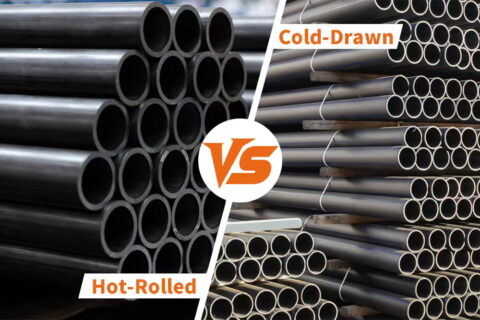
Process Differences in Seamless Steel Pipes: Hot-Rolled vs. Cold-Drawn
Hot rolling and cold drawing are the two most common production processes for seamless steel pipes. Although both produce seamless steel pipes, they exhibit significant differences in physical properties, dimensional appearance, and price.
-
What Materials Are Steel Pipes Made of, and How Do They Differ?
Steel pipes are primarily classified by material into carbon steel pipes, alloy steel pipes, and stainless steel pipes, each possessing distinct advantages and disadvantages.
-
Why Choose China Steel Pipe Suppliers as Your Top Choice?
China steel pipe suppliers offer outstanding advantages in pricing, quality, and delivery reliability, making them the top choice for pipeline material procurement.
-
Steel Pipe Schedule Chart: Dimensions & Specifications
Introduction In steel pipe procurement, specifications serve as the core metrics determining product compatibility, cost, and project feasibility. Amo…
-
How to Select Reliable Chinese Steel Pipe Suppliers? The Ultimate Guide to Sourcing Steel Pipes in China
Introduction If you’re seeking a reliable Chinese steel pipe suppliers but lack procurement experience in China, feeling overwhelmed by numerous…
-
Classification of Stainless Steel Pipes
Stainless steel pipes are widely used in automotive, food processing, marine engineering, and other fields. They offer advantages such as corrosion resistance, high strength, and excellent toughness. Stainless steel pipes can be categorized into austenitic stainless steel pipes, ferritic stainless steel pipes, martensitic stainless steel pipes, and duplex stainless steel pipes. Understanding these types helps us select the most suitable pipes for construction projects.
-
The Difference Between SCH40 and SCH40S
In pipeline systems for petrochemicals, water supply, food processing, and pharmaceuticals, we frequently encounter pipe schedule such as SCH40 and SCH40S.For those unfamiliar with them, SCH40 and SCH40S are very easy to confuse because they look nearly identical, differing only in the addition of an “S” after the “40.” SCH40S is considered superior to SCH40.Through this article, let’s explore the differences between SCH40 and SCH40S, providing you with a practical guide for selecting the appropriate pipe schedule.
-
Advantages and Limitations of Seamless Steel Pipes
Seamless steel pipes (SMLS PIPE) offer advantages such as high strength, high precision, corrosion resistance, and ease of installation. They are widely used in petroleum, chemical, marine engineering, precision equipment, and other fields. This article provides a detailed analysis of the strengths and weaknesses of seamless steel pipes, serving as a procurement guide for your reference.
-
Differences Between SMLS Pipes, ERW Pipes, LSAW Pipes, SSAW Pipes, and DSAW Pipes
SMLS pipes, ERW pipes, LSAW pipes, SSAW pipes, and DSAW pipes are several critically important types of tubing in industrial production, widely used across sectors such as energy transportation, petroleum refining, and construction engineering. While these pipes share many similarities, they exhibit significant differences in application domains, specification ranges, mechanical strength, and manufacturing processes. This article provides a detailed analysis of their characteristics, advantages, and suitable usage scenarios to serve as an effective procurement guide.
-
Advantages and Disadvantages of Carbon Steel Pipes
Carbon steel pipes are a highly common type of piping material, widely used across numerous fields such as energy transmission, mechanical manufacturing, and construction engineering. Compared to other piping materials, carbon steel pipes offer advantages including high strength, resistance to high temperatures and pressures, and low cost. This article will provide an in-depth analysis of the strengths and weaknesses of carbon steel pipes, offering you an effective purchasing guide for carbon steel pipes.