
































Seamless Steel Pipe Material Selection Guide
Seamless Carbon Steel Pipe
- Features: Carbon content determines performance, making it the most fundamental pipe material.
- Advantages: Low cost, high strength, excellent machinability and weldability, serving as the economical choice for conventional fluid conveyance.
- Disadvantages: Prone to rusting, poor corrosion resistance; mechanical properties deteriorate rapidly under extreme high/low temperatures.
- Applications: Conveyance of ordinary water, oil, and gas, as well as low-pressure structural applications.
Seamless Alloy Steel Pipe
- Features: Incorporates elements such as Cr, Mo, and Ni based on application scenarios and requirements to achieve superior performance.
- Advantages: Withstands extreme environments—for instance, P91 material can operate continuously at temperatures ranging from 500°C to 650°C. Exhibits high strength, excellent wear resistance, and fatigue resistance.
- Disadvantages: High cost; demands stringent welding requirements (requires preheating and post-weld heat treatment).
- Applications: Power plant boilers, petroleum refining, deep well drilling.
Seamless Stainless Steel Pipe
- Features: Cr content ≥10.5%, high strength and corrosion resistance.
- Advantages: Exceptional corrosion resistance with a service life of 70-100 years, non-contaminating to media. Wide temperature range, capable of operating from -196°C to 1000°C.
- Disadvantages: Procurement cost is 3-5 times that of carbon steel; severe work hardening leads to high processing costs and challenging installation.
- Applications: Pharmaceutical, food processing, high-end chemical industries, and marine engineering.
Seamless Steel Pipes: Hot-Rolled vs. Cold-Drawn
Hot-rolled Seamless Steel Pipe
Hot-rolled seamless steel pipes are rolled above the metal's recrystallization temperature, essentially constituting a high-temperature reshaping process. Through heating, piercing, and continuous rolling, it significantly refines steel grain size and eliminates microstructural defects. Characterized by high production efficiency and relatively low cost, it excels at manufacturing large-diameter and thick-walled tubes. However, surfaces often exhibit scale, and dimensional tolerances are relatively large. It is suitable for heavy-duty engineering applications with moderate precision requirements, such as construction and energy transmission.
Cold-drawn Seamless Steel Pipe
Cold-drawn seamless steel pipe undergo reduction in diameter or wall thickness at room temperature, falling under the category of cold working. Forced drawing through dies enables extremely high dimensional accuracy and a mirror-like surface finish. Although the cold drawing process induces work hardening, increasing hardness while reducing toughness (typically requiring subsequent annealing to restore properties), it offers unparalleled advantages in producing precision small-diameter, thin-walled tubes. This makes it the preferred tubing material for high-precision mechanical industries such as automotive components and hydraulic equipment.
What is Seamless Mild Steel Pipe?
Seamless mild steel pipe is seamless low-carbon steel pipe with a carbon content ranging from 0.05% to 0.25%. Due to its low carbon content, this material exhibits excellent ductility and toughness, making it easier to cut, bend, and weld compared to high-carbon steel.
Excellent weldability
Low carbon content means that hard and brittle structures are less likely to form during welding, enabling the achievement of strong welds without the need for complex preheating treatments.
Exceptionally high value for money
Compared to stainless steel or alloy steel, low-carbon steel offers lower production costs. For large-scale infrastructure projects with limited budgets—such as long-distance gas transmission pipelines—it represents the most cost-effective option.
Easy to process and form
Low-carbon steel pipes exhibit excellent ductility, enabling easy cold bending, necking, or flaring to meet diverse design requirements.
Environmental Protection
Low-carbon steel ranks among the materials with the highest recycling rates globally. The use of low-carbon steel pipes aligns with the requirements of modern green building practices and sustainable development.
Advantages of Galvanized Seamless Steel Pipes?
Galvanized steel pipes are tubular products coated with a zinc layer on the steel surface through hot-dip or electroplating processes. The protective zinc coating effectively resists oxidation and corrosion, significantly extending the service life of piping systems. They are widely used in outdoor construction, agricultural irrigation, fire protection systems, and telecommunications cable protection.
Outstanding corrosion resistance
This is the primary advantage of galvanized steel pipes. The zinc coating effectively blocks air and water, preventing rust and oxidation while extending the pipe’s service life.
Exceptionally long service life
Under normal operating conditions, high-quality galvanized steel pipes can have a service life of over 50 years; in highly corrosive coastal areas, they can still last approximately 20 years.
High cost-performance ratio
The procurement cost is lower than stainless steel, maintenance frequency is low, and the long-term comprehensive cost is highly competitive.
Low installation cost
Supports multiple connection methods including welding, flanging, and threading, eliminating the need for complex on-site processing.
Environmentally friendly and recyclable
Steel and zinc are both 100% recyclable materials, meeting green building and sustainable development standards.
Interpretation of Seamless Steel Pipe Standards
ASTM Standards (ASTM International)
ASTM International is the most authoritative private standards organization in the United States, with its standards enjoying extremely high recognition worldwide. Primary regions of use: The United States, Canada, Southeast Asia, the Middle East, and most petroleum, petrochemical, and power engineering projects globally.
EN Standards (European Union)
Standards issued by CEN (European Committee for Standardization) aim to harmonize technical specifications across Europe. Primary regions of application: EU member states, the United Kingdom, North Africa, and certain African engineering projects adopting European standards.
ISO Standards (International Organization for Standardization)
ISO is the world's largest and most authoritative non-governmental international standardization organization. It is commonly used in international technical cooperation, multinational tendering, and as a reference for drafting national standards in various countries.
API Standard (American Petroleum Institute)
Technical standards specifically developed for the oil and gas industry. Primary application areas: Upstream, midstream, and downstream sectors of the global oil and gas industry.
In addition to the mainstream standards mentioned above, there are also JIS (Japanese Industrial Standards) and GOST (Russian State Standards), among others. We have systematically categorized and organized these standard documents and offer free PDF downloads.
Why Choose China Seamless Steel Pipe Suppliers?
Price Advantage
Leveraging China's mature industrial chain and supply chain capabilities, the prices of China steel products have consistently held a competitive edge in the international market. According to data released by China's General Administration of Customs, China's total steel exports exceeded 110 million tons in 2024, reaching the highest level since 2016. Weak domestic demand and excess production capacity have led to a significant decline in China steel export prices. The substantial growth in export volumes in recent years also demonstrates the widespread recognition of China steel in the global market.
Complete product specifications and materials
Beyond price considerations, the comprehensive range of product specifications and categories is equally crucial for international clients selecting China steel pipe suppliers. Here, you can source all pipeline materials in one place—including steel pipes, pipe fittings, flanges, valves, and more. You can easily find suppliers that meet your unique requirements. This significantly reduces the time commitment for procurement personnel, greatly simplifies supply chain complexity, and enhances purchasing efficiency.
Stable production capacity and delivery
Beyond comprehensive product specifications and materials, stable production capacity and delivery capabilities remain irreplaceable advantages of China suppliers. It cannot be denied that China’s standing in the international community continues to rise. Simultaneously, China stands as the world’s most stable nation in terms of geopolitics and domestic security. With vast domestic inventory reserves and consistent production capacity, coupled with numerous ports and railways and a well-developed transportation network, it ensures long-term, reliable product delivery.
Reliable quality and after-sales support
Beyond these advantages, China suppliers also offer reliable product quality and after-sales support. At comparable prices, China suppliers consistently outperform their international counterparts in both product quality and after-sales service. This has solidified China’s dominant position in export trade in recent years.
*Related Links:
SMLS vs. ERW vs. LSAW: Technical Differences Explained
Appearance & Dimensions
- Diameter:ERW pipes are predominantly small to medium diameters. Due to production process limitations, SMLS pipes are rarely available in extra-large diameters and command extremely high prices. LSAW pipes are the preferred choice for large-diameter, extra-thick-wall applications.
- Accuracy: ERW pipes typically exhibit the highest dimensional accuracy with excellent wall thickness uniformity. SMLS pipes follow in accuracy. LSAW pipes, due to their larger diameters, present relatively greater challenges in precision control.
Safety & Performance
- Weld-Related Factors: SMLS pipe eliminates the risk of weld corrosion or cracking, making it indispensable in high-pressure, high-temperature, and highly corrosive environments such as boilers and deep-sea operations.
- Heat Treatment: ERW pipes require post-weld online heat treatment to relieve residual stresses; conversely, LSAW submerged arc welding involves significant heat input, demanding higher material toughness.
Cost & Application
- SMLS pipe: Highest price point. Suitable for critical applications such as high-pressure boilers, oil drilling, and hydraulic props.
- ERW pipe: Most cost-effective. Widely used in plumbing systems, scaffolding, fencing, and low-pressure fluid conveyance.
- LSAW pipe: Mid-range pricing. Primarily serves long-distance oil and gas transmission, bridge piling, and offshore construction.
*Related Links:
Seamless Steel Pipe Weight Calculation Formula
Before learning the calculation formula, we must understand the following concepts:
- OD(Outer diameter):The diameter of the pipe’s external contour.
- ID(Inner diameter):The diameter of the hollow section inside the pipe.
- WT(Wall thickness):The thickness of the pipe’s outer wall.
- L:Pipe length。
- Pi:The constant π, the mathematical constant known as the mathematical constant, is approximately equal to 3.1416.
- ρ:Steel Specific Gravity / Density
- Conversion between inches and mm: 1 inch = 25.4 mm
- Formula for calculating the ID: OD(Outer Diameter) – 2 × WT(Wall Thickness)
Material Density and Calculation Constants Chart:
| Material Category | Density (kg/m³) ρ | Calculation Constant C (≈) |
|---|---|---|
| Carbon Steel | 7850 | 0.024661 |
| Stainless Steel 304/304L | 7930 | 0.024913 |
| Stainless Steel 316/316L | 7980 | 0.02507 |
| Duplex Steel 2205 | 7800 | 0.024504 |
Calculation Formula
Steel Pipe Weight (Kg) = 0.25 * Pi * (OD² - ID²) * L * ρ
Important Notes
- Regarding Density: Density is not an absolute fixed value; it varies depending on the material type, grade, alloy composition, and heat treatment process. The table above provides commonly used reference values for different materials in engineering calculations.
- Unit Conversion:If dimensions (OD, ID, L) are in meters (m), density
ρmust be in kg/m³. The resulting weightWwill be in kilograms (kg).If dimensions are in millimeters (mm), the density must be converted tokg/mm³(which is cumbersome and error-prone). It is highly recommended to convert all length units to meters (m) for calculation.
Simplified Calculation Formula
However, in everyday use, we often cannot easily obtain all the parameters listed above. Therefore, we recommend using the following formula, which provides a simpler method for calculating the weight per meter of pipes made from different materials.
Depending on the material, the weight of the pipe can be quickly calculated by substituting the constant C and the formula, with the unit being kg/m.
Steel Pipe Weight (Kg/M) = C * WT * (OD - WT)
The constant C = π × ρ / 1,000,000 (where ρ is in kg/m³), and both OD and WT are in mm. The table above summarizes the calculation constants for several commonly used materials in seamless steel pipes.
Example Usage:
Calculate the weight of a carbon steel pipe (OD=114mm, WT=17.1mm).
Weight = 0.024661 * 17.1 * (114 - 17.1) ≈ 40.86 kg/m
Calculate the weight of a stainless steel pipe (OD=219mm, WT=12.7mm).
Weight = 0.024913 * 12.7 * (219 - 12.7) ≈ 65.27 kg/m
*Related Links:
What is Seamless Black Steel Pipe?
Seamless black steel pipes are essentially seamless carbon steel pipes that have not undergone galvanization. During manufacturing, carbon steel pipes develop a layer of black iron oxide scale on their surface, hence they are also called black steel pipes. After galvanization, the surface of galvanized steel pipes appears silver-white, and they are also known as white iron pipes or white steel pipes.
*Related Links:
What is Titanium Alloy Seamless Pipe?
Titanium alloy pipes are manufactured by alloying titanium with other chemical elements such as aluminum, vanadium, molybdenum, zirconium, and others. While commercially pure titanium already exhibits excellent corrosion resistance, the addition of alloying elements significantly enhances the pipes’ tensile strength, high-temperature stability, or machinability.
Titanium alloy seamless tubes utilize seamless tube manufacturing processes, offering inherent technological advantages. Combined with the use of titanium alloy materials, they achieve leading performance in structural strength, extreme corrosion resistance, service life, and fatigue resistance.
*Related Links:
Hydraulic vs. Ordinary Seamless Pipe: 5 Key Differences
Dimensional Precision and Tolerances
The most visible difference lies in the accuracy of the dimensions.
- Hydraulic Seamless Pipe: Manufactured to extremely tight tolerances (often following DIN 2391 or EN 10305-1 standards). Both the outer diameter (OD) and inner diameter (ID) are precisely controlled to ensure a leak-free fit with hydraulic fittings and ferrules.
- Ordinary Seamless Pipe: Typically follows general standards like ASTM A106 or API 5L. The tolerances are much looser, as they are primarily used for fluid transport where millimetric precision isn’t the priority.
Inner Surface Smoothness
For hydraulic systems, the “cleanliness” of the flow is everything.
- Hydraulic Pipes: Undergo special internal treatments to ensure a smooth, scale-free inner surface. This minimizes turbulence and prevents friction-induced heat.
- Ordinary Pipes: May have a rougher internal finish with minor scales or oxidation, which is acceptable for water or gas transport but would damage sensitive hydraulic valves and pumps.
Pressure Rating and Yield Strength
While both are “seamless,” their ability to handle “burst pressure” differs.
- Hydraulic Pipes: Designed to withstand high-pressure pulses and vibrations. They often feature higher yield strength and are tested at pressures far exceeding their working load.
- Ordinary Pipes: Rated for static or low-pressure flow. They are not optimized for the rapid pressure spikes common in hydraulic cylinders.
Surface Treatment and Corrosion Resistance
- Hydraulic Pipes: Usually come with professional surface protection, such as Zinc plating (Galvanized), Phosphating, or Cr6-free coating. This ensures the pipes remain rust-free during storage and operation in humid environments.
- Ordinary Pipes: Often supplied with a simple black primer or oil coating, which provides minimal long-term corrosion protection.
Material Purity and Ductility
- Hydraulic Pipes: Made from high-quality “killed steel.” The material is highly ductile, allowing the pipe to be bent (using a pipe bender) or flared without cracking.
- Ordinary Pipes: Generally more rigid. If you attempt to perform a 90-degree cold bend on a standard structural seamless pipe, the risk of wall thinning or external cracking is significantly higher.
*Related Links:
What is NPS and Schedule?
What is The Nominal Pipe Size(NPS)?
Nominal Pipe Size (NPS) is a standardized term used to describe pipe diameter, widely applied in industrial piping systems. NPS does not represent the actual diameter of the pipe but rather an approximate value used to simplify pipe classification and selection.
What is a Schedule?
In steel pipe specifications and dimensions, Schedule (SCH) denotes the pipe wall thickness, serving as a key factor in determining the pipe’s pressure rating and strength. A higher Schedule number indicates thicker pipe walls and greater pressure-bearing capacity.
Schedule is a standardized classification associated with NPS. The most common Schedule designations include 10, 20, 40, 80, 160, etc., with each designation corresponding to a specific wall thickness.

The standardization of NPS and SCH is primarily established by the American National Standards Institute (ANSI), the American Society of Mechanical Engineers (ASME), and the American Society for Testing and Materials (ASTM).
*Related Links:
Frequently Asked Questions
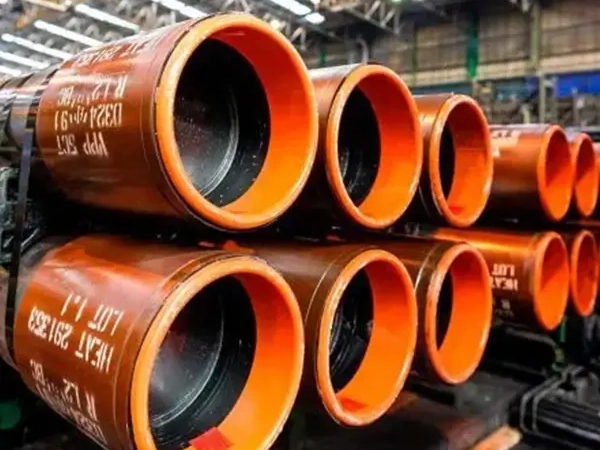
Seamless steel pipe, as its name suggests, is a type of steel pipe with no seams around its circumference. Unlike ordinary steel pipes, which are formed by rolling steel plates and then welding them together, seamless steel pipes are produced by directly “piercing” and expanding a solid round steel billet (pipe blank) from its center through hot rolling, cold rolling, or cold drawing processes. This manufacturing method ensures the pipe wall possesses a highly dense and uniform microstructure.
Seamless pipes are formed by direct piercing or drawing of round steel bars, resulting in a single-piece structure. Welded pipes, on the other hand, are manufactured by rolling steel plates into tubes and joining them via resistance welding or high-frequency welding, leaving a distinct longitudinal or spiral weld seam on the pipe wall. Due to the absence of welds, seamless pipes offer superior pressure resistance and safety, making them suitable for high-pressure environments. However, they are more expensive than welded pipes.
Seamless pipes (Smls) are manufactured by heating solid round steel (pipe billets), piercing them, and then rolling them continuously. The entire process involves no welding steps whatsoever, resulting in a pipe body that is a single, continuous piece of metal. ERW pipes use hot-rolled steel coils as raw material. The steel sheets are rolled into a cylindrical shape, and the edges are fused together using heat generated by electrical resistance. They feature a longitudinal weld seam.
Numerous factors influence the strength of steel pipes, including material composition, wall thickness, and manufacturing processes. Under essentially identical conditions, seamless steel pipes are indeed more robust than welded steel pipes in the vast majority of operating conditions.
By observing the appearance, it is easy to determine whether it is seamless steel pipe. Welded steel pipes have a distinct weld seam on the pipe body, whereas seamless steel pipes do not.
The service life of seamless steel pipes is closely related to their material composition. In dry, non-corrosive environments, high-quality seamless carbon steel pipes typically have a service life exceeding 50 years. In oil and gas transportation, where the medium may contain corrosive substances like hydrogen sulfide, the design life is generally 20-30 years. In high-temperature, high-pressure environments like boilers, seamless alloy pipes are commonly used, with a service life of 15-25 years. In water supply/drainage or food/pharmaceutical sectors, seamless stainless steel pipes are typically employed. Due to their exceptional corrosion resistance, their lifespan often exceeds 70-100 years.
In the vast majority of cases, seamless steel pipes of the same material and specifications do indeed command a higher price than welded pipes.
Due to limitations in their manufacturing processes, seamless steel pipes cannot be produced in exceptionally large diameters. The wall thickness tolerances for seamless steel pipes are generally larger than those for welded steel pipes. Furthermore, they are more expensive.
The maximum outer diameter of mainstream hot-rolled seamless steel pipes currently available on the market typically ranges from 610mm to 720mm (24 to 28 inches). When the diameter exceeds 711mm, the cost-effectiveness of SAW pipes (submerged arc welded pipes) significantly surpasses that of seamless pipes. Moreover, modern welding technology can now meet the requirements of the vast majority of large-diameter, high-pressure applications.
The petroleum and natural gas industry, power and energy sector, mechanical processing and manufacturing, construction and steel structure engineering, chemical engineering and fluid processing industries all require extensive use of seamless steel pipes.